
Why Provence rosé tastes different at the table.
There is a version of rosé that exists purely for the occasion. It is cold, it is pink, it is poured on a terrace somewhere warm, and it does exactly what it is supposed to do. Nobody is complaining. But there is another version, one that most people only discover by accident, where the wine in the glass actually changes depending on what is on the plate in front of you. That version is what Provence has been quietly producing for decades, and it is not the same thing at all.
The difference comes down to how the wine is made and, more specifically, what the winemaker is trying to achieve. A large proportion of the rosé produced around the world is made to be approachable, light, and immediately enjoyable. The grapes are picked early to keep the acidity fresh, the wine is made quickly and kept simple, and the result is something clean and easy that works perfectly well on its own. There is nothing wrong with that. But it is not a food wine. It was never meant to be.
What makes Provence different.
Provençal rosé is built on a different set of grape varieties and a different winemaking philosophy. Grenache, Cinsault, Syrah, and Mourvèdre are the backbone of most blends in the region, and each one brings something to the glass that lighter, more neutral varieties simply cannot. Grenache gives weight and a subtle spice. Cinsault brings freshness and a floral lift. Mourvèdre adds structure and a savouriness that makes the wine behave more like a red at the table than a white. According to Vins de Provence, this complexity of blend is one of the defining characteristics of the appellation and one of the reasons Provençal rosé has earned its place in serious restaurants around the world.
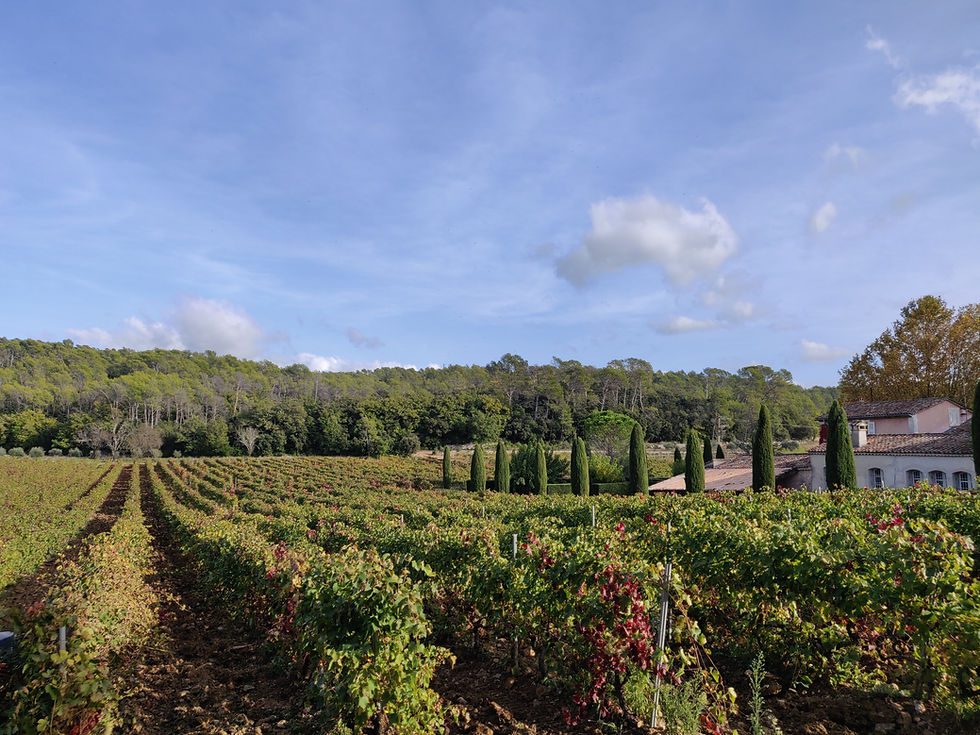
At Le Grand Cros, the blend has been refined over thirty-five years of paying attention to what the land gives and what the table asks for. The estate sits in the Var, in the heart of the Côtes de Provence appellation, where the combination of poor, well-drained soils, long dry summers, and cool nights produces grapes with natural concentration and a mineral quality that carries through into the finished wine. That minerality is what you notice when you eat alongside it. It does not compete with the food. It responds to it.
The table test.
The simplest way to understand the difference between a terrace rosé and a table rosé is to try them both with food. Pour something light and simple alongside a plate of grilled fish with herbs and you will find it gets lost. The food overwhelms it and the wine disappears. Pour a well-made Provençal rosé alongside the same dish and something different happens. The acidity in the wine cuts through the richness of the fish, the herbal notes in the wine echo the herbs on the plate, and the two things together are better than either one alone. That is what food and wine pairing actually means, not a complicated set of rules to follow but a straightforward question of whether the wine makes the food taste better and the food makes the wine taste better.
Jancis Robinson has described the best Provençal rosés as wines that "punch well above their weight at the table," and it is a description that captures something real. These are wines that have been underestimated for years, partly because of their colour and partly because of the association with simple summer drinking. The serious wine world is catching up, but the estates that have been making food wines in Provence since before it was fashionable have known it all along.
Why it matters.
It matters because how you drink a wine changes the experience of it entirely. A bottle of Le Grand Cros rosé drunk cold on its own on a warm afternoon is a pleasant thing. The same bottle opened at the dinner table, poured alongside a slow-cooked lamb, a plate of grilled vegetables from the kitchen garden, or a simple cheese at the end of a meal, becomes something else. It opens up. It shows you things it was keeping back. That is the mark of a wine that was made with the table in mind from the beginning, and it is the standard we have held ourselves to at this estate for over three decades.
The next time you open a bottle of Provençal rosé, do it at the table rather than before you sit down. You might be surprised by what you find.
Le Grand Cros produces rosé, red, white, and sparkling wines from 24 hectares of vines in the Var, Provence. To find out more about the estate or arrange a visit, get in touch.


Comments