
The harvest - what actually happens behind the scenes?
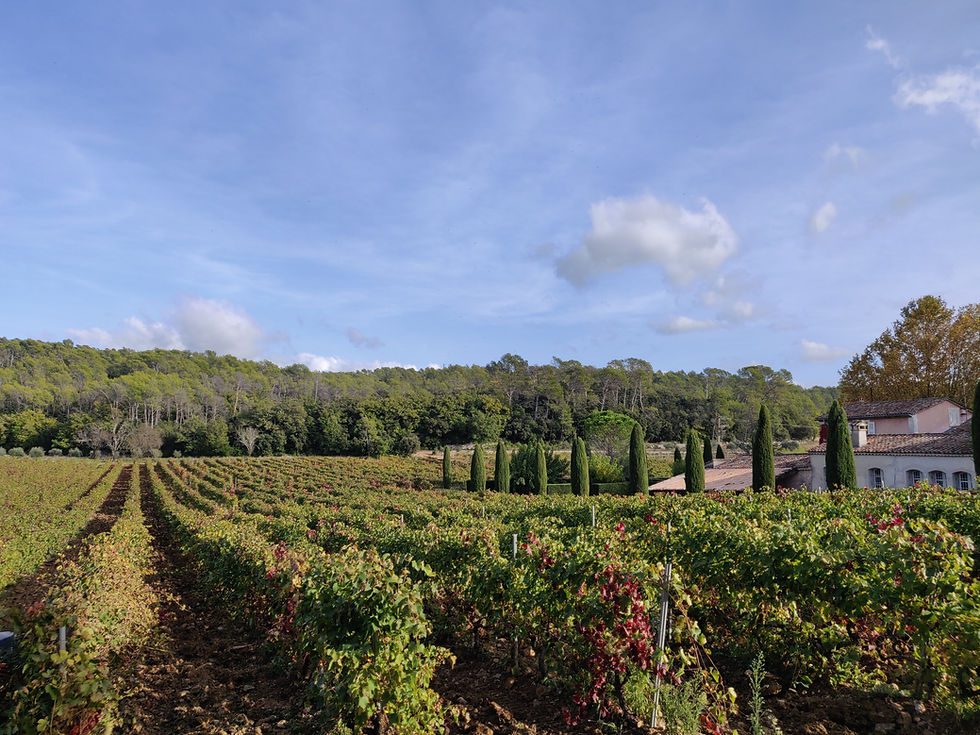
People romanticise the harvest. And understandably so. There is something about the image of it, the rows of heavy vines in the September heat, the baskets filling with fruit, the whole year's work coming to a head in the space of a few weeks, that lends itself to a certain kind of storytelling. The reality is messier, more demanding, and far more interesting than the photographs suggest. At Le Grand Cros, harvest is not a moment to be celebrated. It is a problem to be solved, carefully, every single year, with no guarantee that last year's solution will work this time.
The reason for that is simple. Every vintage is different. The spring might have been wet or dry. The summer might have been hotter than usual or broken by storms at the wrong moment. The grapes in one plot might be two weeks ahead of the grapes in another, even when the two plots are separated by nothing more than a dirt track. A winemaker who approaches harvest with a fixed plan is a winemaker who is not really paying attention, and the wines show it.
It starts long before September.
The decisions that determine the quality of a harvest are made months in advance, in the vineyard, through the work that most people never see and few wine drinkers ever think about. Pruning in winter sets the yield for the following year. Training and canopy management through spring and summer shapes how the grapes develop and what level of ripeness they reach by the time picking begins. The team at Le Grand Cros moves through the vines continuously from February onwards, making small adjustments and watching closely, because by the time harvest arrives the important decisions have largely already been made.
According to Vins de Provence, the timing of the harvest is one of the most consequential choices a winemaker makes all year. Pick too early and the grapes lack ripeness, producing wines that are thin and sharp. Pick too late and you lose the freshness and acidity that makes Provençal rosé what it is. The window between the two is sometimes narrow and always unforgiving, and reading it correctly requires a combination of technical knowledge and the kind of instinct that only comes from years of watching the same vines in the same place respond to the same rhythms.
The picking itself.
At Le Grand Cros, the harvest is done by hand. It is slower than machine harvesting and more expensive, but it allows the team to select only the fruit that is ready and to treat the grapes gently enough that they arrive at the winery intact. Damaged or overheated fruit starts to oxidise before it even reaches the press, and that oxidation shows up in the finished wine as a flatness or a coarseness that no amount of careful winemaking can fully correct. The Institut Français de la Vigne et du Vin has consistently shown in its research that hand harvesting, particularly for rosé production, produces measurably better results in the aromatic quality of the finished wine. At this estate, that is not a point of debate. It is just how things are done.
The picking teams start before dawn, when the grapes are at their coolest and the sugars are in the best possible balance. By mid-morning the heat is already building and the pace shifts accordingly. The filled crates move quickly to the winery, where they are weighed, checked, and pressed with as little delay as possible. Time matters enormously at this stage. Every hour between the vine and the press is an hour in which the fruit can deteriorate, and the estate's recent investment in new winery equipment means that the gap between picking and pressing is now shorter than it has ever been.
In the cellar, patience takes over.
Once the juice is in the tank, a different kind of attention takes over. The fermentation of rosé is a slow and temperature-controlled process, managed carefully to preserve the delicate aromatics that make the difference between a wine that is merely fresh and one that is genuinely interesting. Julian Faulkner's training at ENITA in Bordeaux gave him a thorough technical grounding in fermentation chemistry, but what thirty-five years at this estate has taught him is that the cellar is fundamentally a place of restraint. The wine knows what it wants to be. The winemaker's job is to create the right conditions and then get out of the way.
The blending decisions come later, once the individual parcels have had time to settle and show their character. Some years the blend comes together quickly and intuitively. Other years it takes longer, tasting through dozens of combinations before the right proportions reveal themselves. There is no formula. There is only the wine in the glass, and the question of whether it is honest, balanced, and worth the year of work that produced it.
What the harvest teaches you, every year.
The harvest is humbling in a way that nothing else in the winemaking calendar quite is, because it reminds you, every single year, that the land is in charge and you are not. You can prepare well, work carefully, and make all the right decisions, and still find that a hailstorm in August has changed everything. You can have a difficult spring and a cool summer and then be surprised in September by grapes of extraordinary quality. The variables are too many and too unpredictable to ever feel fully in control, and the estates that make the best wine over time are the ones that have accepted that and found a way to work with it rather than against it.
At Le Grand Cros, thirty-five harvests have produced thirty-five different wines, each one shaped by the particular character of its year. Some have been easier than others. Some have been genuinely exceptional. All of them have been honest, because that is the only kind of wine this estate knows how to make.
Le Grand Cros welcomes guests for guided visits and tastings throughout the year. To arrange a visit or find out more about the estate, get in touch.


Comments